
I used to believe my hair was just “naturally frizzy and dull.” Turns out, it wasn’t. It was damaged — and most of that damage was coming from a handful of bad habits I repeated every single week without ever realizing it. The frustrating part is that nobody tells you about these hair care mistakes until you’ve already spent months wondering why your hair won’t cooperate.
The good news is that fixing these hair care mistakes doesn’t require expensive products or salon visits. It requires noticing what you’re doing wrong and swapping a few simple habits. This guide walks through the ten mistakes that damage hair the most, in roughly the order of how much damage they cause, and gives you the fix for each one.
Let’s get into it — because if you’re making any of these hair care mistakes, your hair has been telling you for a while.

This is the mistake that quietly undoes everything else, and almost everyone makes it.
Hot water opens up the hair cuticle — the outer layer of overlapping scales that protect the inside of each strand. When that cuticle is open, your hair loses moisture fast, becomes more porous, and ends up looking frizzy and feeling rough. Over time, washing with very hot water makes hair weaker and more prone to breakage.
The fix: Rinse with warm or lukewarm water instead of hot. If you want an extra boost, finish with a quick cool rinse — cool water helps seal the cuticle back down, which locks in moisture and adds shine. You don’t need to suffer through freezing water; just a comfortably cool final rinse makes a real difference.
Mistake #2: Towel-Drying by Rubbing
Rubbing your hair with a towel to dry it is one of the most common hair care mistakes, and also one of the most damaging.
When your hair is wet, it’s at its weakest and most fragile state. The cuticle is swollen and the strands stretch easily. Rubbing wet hair aggressively with a towel creates friction that roughs up the cuticle, causes tangles, and snaps weak strands.
The fix: Don’t rub. Instead, gently squeeze the excess water out of your hair with the towel, or better yet, wrap your hair in a soft cotton T-shirt or a microfiber towel and let it absorb the water. Squeezing and wrapping remove the same amount of water but without the damaging friction.
Mistake #3: Brushing Wet Hair With the Wrong Brush
Brushing your hair right after a shower with a fine-tooth comb or a standard brush is asking for trouble.
As we just covered, wet hair is weak and stretchy. Pulling a brush through it while it’s tangled puts real stress on the strands, and it’s a fast track to breakage and split ends. Yet brushing wet hair is an incredibly common hair care mistake, because most people think they need to brush their hair out right after washing.
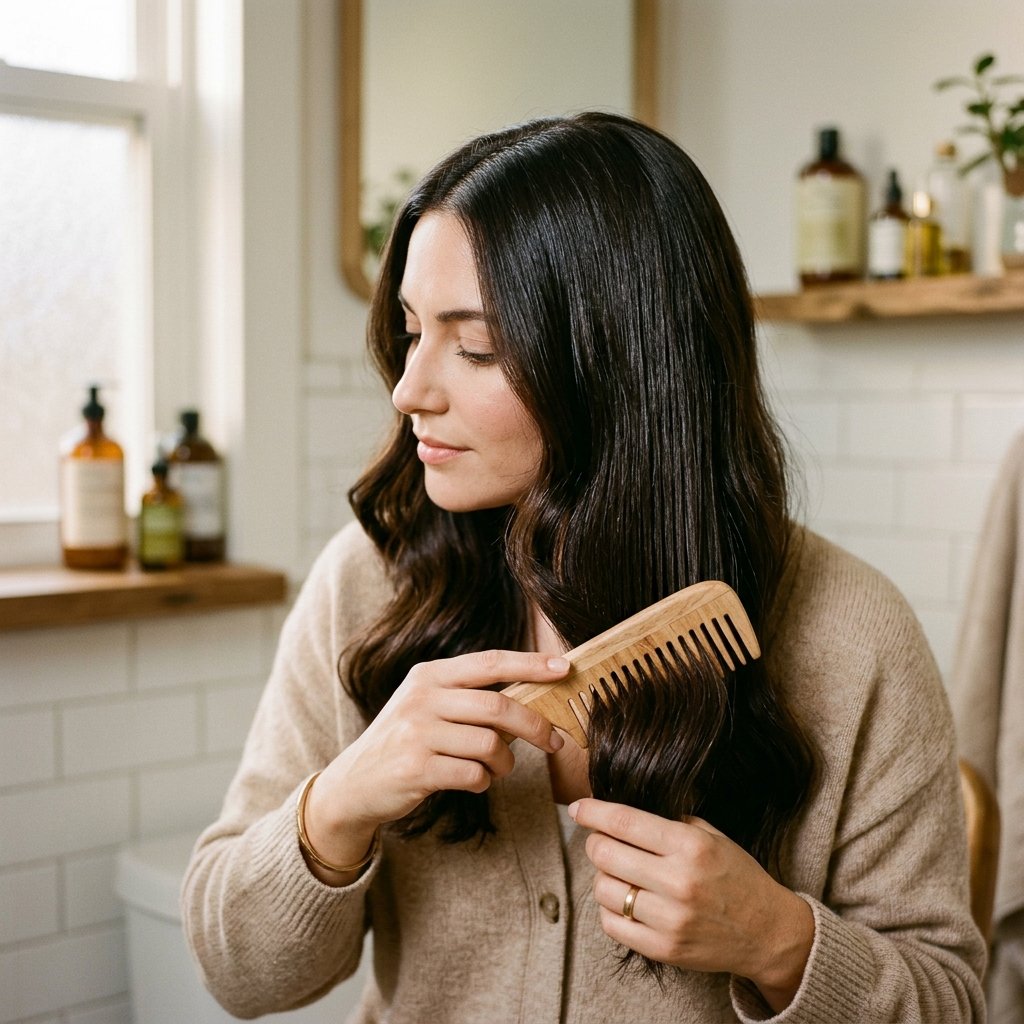
The fix: After washing, use a wide-tooth comb to gently detangle, working from the ends up to the roots. Wide teeth glide through tangles with far less force than a tight brush. If you must use a brush, look for one designed for wet hair with flexible bristles. And always start from the bottom.
Mistake #4: Skipping Heat Protectant
Heat styling — blow dryers, straighteners, curling irons — is fine in moderation, but the vast majority of people skip the single product that makes it safe.
Heat above a certain temperature can literally melt the protein structure of your hair. A heat protectant doesn’t make heat harmless, but it forms a barrier that significantly reduces the damage, keeping moisture in and preventing the brittleness that leads to breakage. The American Academy of Dermatology highlights just how much of a difference heat protectant makes.
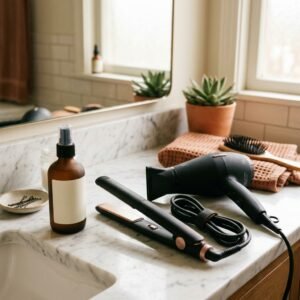
The fix: Always apply a heat protectant spray or cream before any heat styling, no matter how little heat you use. Skipping heat protectant is one of the hair care mistakes that shows up fastest. It’s a cheap insurance policy that protects your hair every single time.
Mistake #5: Over-Washing
Shampooing your hair every single day can strip it of its natural oils, and your scalp responds by producing more oil to compensate. That’s why people who wash daily sometimes find their hair gets greasy even faster — they’re locked in a cycle.
Over-washing leaves hair dry, brittle, and stripped, while also over-stimulating the scalp’s oil production. Most people simply don’t need to wash daily, making over-washing one of the easier hair care mistakes to fix.
The fix: Aim to wash your hair two to three times a week instead of daily. If your hair gets oily quickly, you can rinse with water or use a dry shampoo on non-wash days to stretch the time between washes. Give your scalp a few weeks to adjust, and it will likely start producing less oil.

Mistake #6: Using the Wrong Shampoo for Your Hair Type
This one is less obvious, but it matters. Not all shampoos are the same, and using a harsh, stripping formula when you have dry hair — or a heavy moisturizing formula when you have fine hair — makes things worse.
Harsh sulfates can strip away natural oils, leaving dry hair even drier. On the flip side, formulas that are too heavy can weigh down fine hair and make it look limp. The wrong shampoo fights your hair type instead of working with it.
The fix: Match your shampoo to your hair type. If your hair is dry, look for a gentle, moisturizing or sulfate-free formula. If your hair is oily, a lighter clarifying shampoo used occasionally can help. Pay attention to how your hair feels after washing — it should feel clean and soft, not stripped or weighted down.
Mistake #7: Conditioning Wrong
It’s surprisingly easy to condition your hair incorrectly, and plenty of people do one of two extremes: they skip conditioner entirely, or they slather it all over their scalp.
Skipping conditioner leaves hair rough and tangly, especially after damage. But putting conditioner on the scalp can weigh hair down and leave it looking greasy, because the scalp doesn’t need that moisture.
The fix: Apply conditioner to the mid-lengths and ends of your hair — the parts that dry out and get damaged most — and avoid the roots and scalp. Leave it on for the recommended time, and rinse thoroughly. If your hair is very dry and damaged, a deep conditioning mask once a week can help, like the one we covered in our guide to the K18 molecular repair treatment.
Mistake #8: Over-Brushing
You might have heard the old advice that brushing your hair a hundred strokes a day makes it shiny. That advice is wrong, and following it creates more hair care mistakes than it solves.
Over-brushing causes friction that wears away the cuticle and leads to split ends, and it can also trigger a dry scalp by over-stimulating it. If your hair already has damage or is prone to breakage, excessive brushing makes it noticeably worse.
The fix: Brush your hair only enough to detangle and style it — usually once or twice a day, starting from the ends. There’s no benefit to over-brushing, and the humble approach will leave your hair healthier.
Mistake #9: Sleeping on Rough Pillowcases

This is the mistake that many people never even consider, but cotton pillowcases quietly damage hair every night.
Rough cotton creates friction as you move in your sleep, which can tangle hair, dry it out, and cause breakage and frizz by morning. Over time, this nighttime friction takes a real toll on the ends of your hair.
The fix: Swap to a silk or satin pillowcase, which is much smoother and allows your hair to glide instead of snagging. Alternatively, you can loosely tie your hair up in a soft scarf or use a silk bonnet at night. Dermatologists recommend smooth surfaces to cut down on friction while you sleep, which is why silk is worth trying. These small changes make a surprisingly big difference in how your hair looks in the morning.
Mistake #10: Using Heat Tools at Maximum Settings
The final mistake is cranking your heat styling tools all the way up, thinking it’ll give you faster or better results.
Higher heat does not mean better results. It just means more damage. Most heat tools are perfectly effective at medium temperatures, and using the maximum setting is rarely necessary — it’s only increasing the risk of frying your hair.
The fix: Use the lowest heat setting that gets the job done for your hair type. Fine hair needs low heat, while thick or coarse hair might need a bit more, but you still rarely need the max. And remember to always use heat protectant first, no matter the setting.
How Your Hair Care Mistakes Add Up Over Time
Here’s the thing about these ten hair care mistakes: none of them, on their own, destroys your hair overnight. But they stack up. Washing too hot, drying by rubbing, skipping heat protectant, over-brushing — each one takes a small toll, and together they’re why your hair ends up frizzy, split, and weak even though you feel like you’re “taking care of it.”
The good news is that correcting even a few of these hair care mistakes will show up in how your hair looks within a few weeks. You don’t have to fix all ten at once. Start with the ones you know you’re doing, and give your hair time to recover.
The Bottom Line

Healthy hair is less about the expensive products you buy and more about the hair care mistakes you stop making. Reducing heat damage, handling wet hair gently, washing less often, and being patient with your routine will do more for your hair than almost any product you can purchase.
If you’ve been frustrated with frizzy, dull, or breaking hair, look honestly at this list and pick out the two or three hair care mistakes you’re making. Fix those first, stick with the improvements, and your hair will thank you — often faster than you expect.